






Identify the problem and be free!
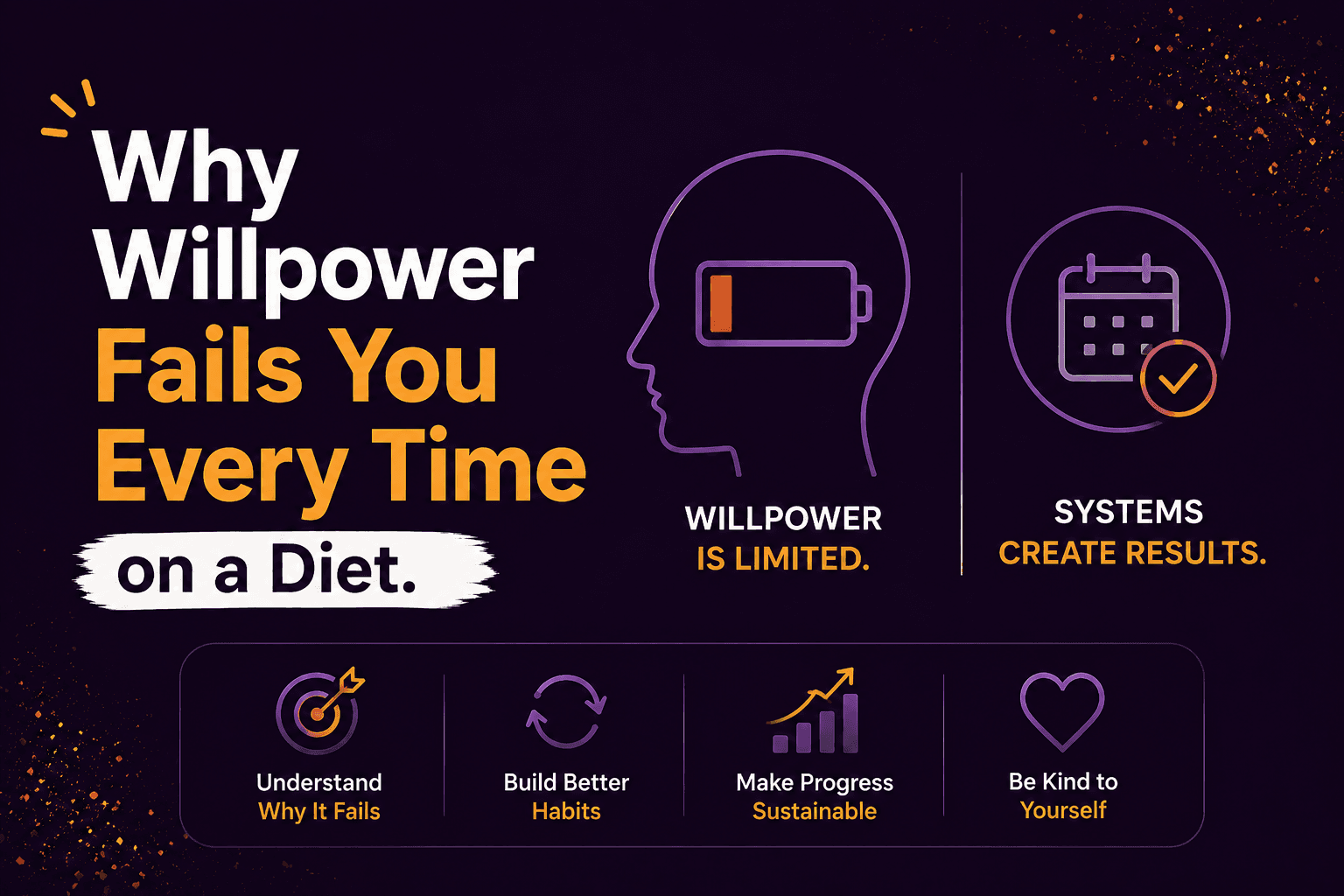
Have you ever felt fatigue while tracking your calories? Most people just download a calorie tracking app, and quietly abandon it after using it for three days? If so, you are not alone and more importantly it's not a will power issue.
Building a calorie tracking habit that lasts is not about discipline or logging every meal with perfect accuracy. It is about removing friction, starting small, and letting the data do the motivating. Most people quit not because tracking is hard, but because they make it harder than it needs to be.
This guide will help you understand the psychology behind why calorie tracking habits fail and how they even work. When you are working towards a better health and fitness goal, it should not feel like a dreadful chore. For Tracking calories & protein intake, Slim AI - Calorie Tracking app is designed to make daily logging take 30 seconds, removing the biggest reason why most people quit.
Why Calorie Tracking Habits fail ( And its not your Fault)
The majority of people who start calorie tracking do not fail because they lack commitment. The reason for their fatigue is setting themselves to a system that demands too much too soon.
The most common trap is your all-or-nothing mindset which holds you back. One missed day and suddenly, you just lose all hope - and back to your old ways again and you stop. This is not a character flaw; it is an inevitable oscillation of the process that researchers have discussed extensively. Dr BJ Fogg at Stanford's Behavior Design Lab has shown that habits mostly fail when higher levels of motivation are required to maintain. When the motivation graph lowers - and it always does - hence the behavior collapses with it. Relying on bursts of motivation can lead you to shame and hopelessness within yourself which might be the cause of your consistent agony.
Another Problem of Delayed Gratification also remains. You log your breakfast, lunch and dinner and nothing happens. The scale doesn't move overnight and you wait. Your efforts feel abstract - somewhat unrewarded which is extremely difficult for the brain to form a lasting association between behavior and a positive outcome.
“Tracking feels tedious not because you are lazy, but because the reward if too far away to feel real”
Psychology behind Why Habits are Hard to Start
Every Habits consists of a three part loop, as described by Charles Duhigg in his famous book, “The Power of Habit”. He explains that a cue triggers the behavior, the routine itself and a reward that reinforces it. For a habit to become, all three stages must be present and they should be associated with time.
Calorie Tracking is just one behavior in the journey of health & fitness. Whatever your health goals are, it creates the reminder of delayed reward for the individual, hence increasing difficulty in following through. The cue is hunger or meal time. The routine is opening the app and logging. However, the reward is visible weight loss, muscle gain. Understanding the first step and where the problem lies will help you not only find your willpower but to redesign your system.
Why we track Calories ( Its not about Restriction)
Let's reframe the why part first.
Many people interpret counting calories as a form of self punishment. A restrictive practice that judges every bite - every craving. This schema is inaccurate and counterproductive.
Calorie tracking, at its core, is about nutritional awareness. It is not about restriction. It is about knowing. Most people significantly underestimate how many calories they consume each day — not because they are dishonest, but because portion sizes are genuinely difficult to judge without data. A 2011 systematic review published in the Journal of the American Dietetic Association found that self-monitoring — simply keeping track of what you eat — is one of the strongest individual predictors of successful, sustained weight loss. Not the strictest diet. Not the hardest workout. Just awareness.
You do not need to be perfect. Consistency at 80% — logging most meals, most days, with reasonable accuracy — is significantly more effective than aiming for perfect logging and quitting when you miss a day.
What Calorie Tracking really does to your Brain
You make a feedback loop when you log a meal and look at the data. You can see what you ate. You can see how it fits into your day. You change something a little bit. This loop gets stronger over time, but the reward changes. It goes from the long-term goal of losing weight to something much more immediate: getting clear. Take charge. The simple pleasure of knowing exactly where you are.
According to psychologist Albert Bandura's research on self-regulation, this kind of feedback in real time is one of the best ways to get people to change their behavior for good. The goal is no longer out of reach; it becomes clear in the data every day.
Step 1: Start Smaller Than You Think You Should
Do not track every meal on Day 1. Start with just breakfast for the first week. This sounds almost too easy — which is exactly the point. BJ Fogg's core principle is that a behavior small enough to require no motivation is a behavior that actually happens. One logged meal per day is infinitely more valuable than a perfect system you abandon by Friday. Once breakfast is automatic, add lunch. Then dinner. Build the habit in layers.
Step 2: Attach Tracking to an Existing Habit (Habit Stacking)
In Atomic Habits, James Clear describes a technique called habit stacking: linking a new behavior directly to something you already do. The formula is simple — "After I do X, I will do Y." For calorie tracking, this might look like: "After I make my morning coffee, I log my breakfast on Slim AI." The existing habit (making coffee) becomes the cue for the new behavior (logging). This removes the need to remember to track, because the trigger is already built into your day.
Step 3: Consistency over Accuracy
A logged estimate is infinitely more useful than a perfectly accurate zero. Research published in the New England Journal of Medicine confirmed that even when people significantly underestimate their calorie intake, consistent self-monitoring still produces better outcomes than not tracking at all. Do not let the perfect be the enemy of the good. If you are not sure of the exact calorie count, make a reasonable estimate and log it anyway. Consistency over time corrects for individual inaccuracies.
Step 4: Best Calorie Tracking App
The single biggest predictor of whether someone continues tracking long-term is how easy the tool makes it. Apps like MyFitnessPal and Cronometer established the category and have huge food databases — but they also introduced complexity that creates friction. Slim AI- Calorie Tracker is built around the opposite principle: photograph your meal, and the app identifies the contents, estimates portions, and logs the calories in under two minutes. When the process is that fast, the habit has no reason to break.
Step 5: Celebrate Small Wins, Not Just Results
The reward must come before the weight loss for the habit to stick. Do not wait for the scale to move before acknowledging your progress. Celebrate a 7-day logging streak. Notice when you choose a meal differently because you checked the numbers first. These small moments of recognition shift something fundamental — your identity moves from "someone trying to lose weight" to "someone who tracks." That identity shift is what makes the habit permanent.
What Happens if you Track Calories
After two to four weeks of consistent tracking, something shifts. The behavior stops feeling like effort and starts feeling like information-gathering; which is exactly what it is.
You stop guessing and start knowing. Meals become decisions rather than anxieties. The question changes from "Is this okay to eat?" to "How does this fit into my day?" — a far healthier and more empowering way to relate to food.
Your relationship with food becomes neutral. Not good or bad. Not clean or dirty. Just data. Research published in the International Journal of Eating Disorders found that people who plan their eating in advance, even loosely - make significantly better choices without consciously trying to. The awareness itself changes the behavior.
Long-term trackers consistently report something unexpected: they start making better food choices automatically, without actively thinking about it. The habit rewires the decision-making process. When you have seen the data enough times, your instincts update to reflect it.
Conclusion: SMALL STEPS, LASTING CHANGE
Building a calorie tracking habit that lasts comes down to one thing: making it easy enough that you do not need willpower to continue. Start with one meal. Stack it onto an existing routine. Use a tool that gets out of your way.
The habit does not need to be perfect. It needs to be consistent. A logged estimate today is worth more than a perfect log you plan to start on Monday.
Tracking is not about controlling what you eat — it is about understanding it. And once you understand it, everything else becomes easier.
If you are looking for a calorie tracker that fits into real life rather than demanding it change, Slim AI- Calorie Tracker is worth trying. Photograph your first meal today and see how simple it can actually be. Download Slim AI-Calorie Tracker!