






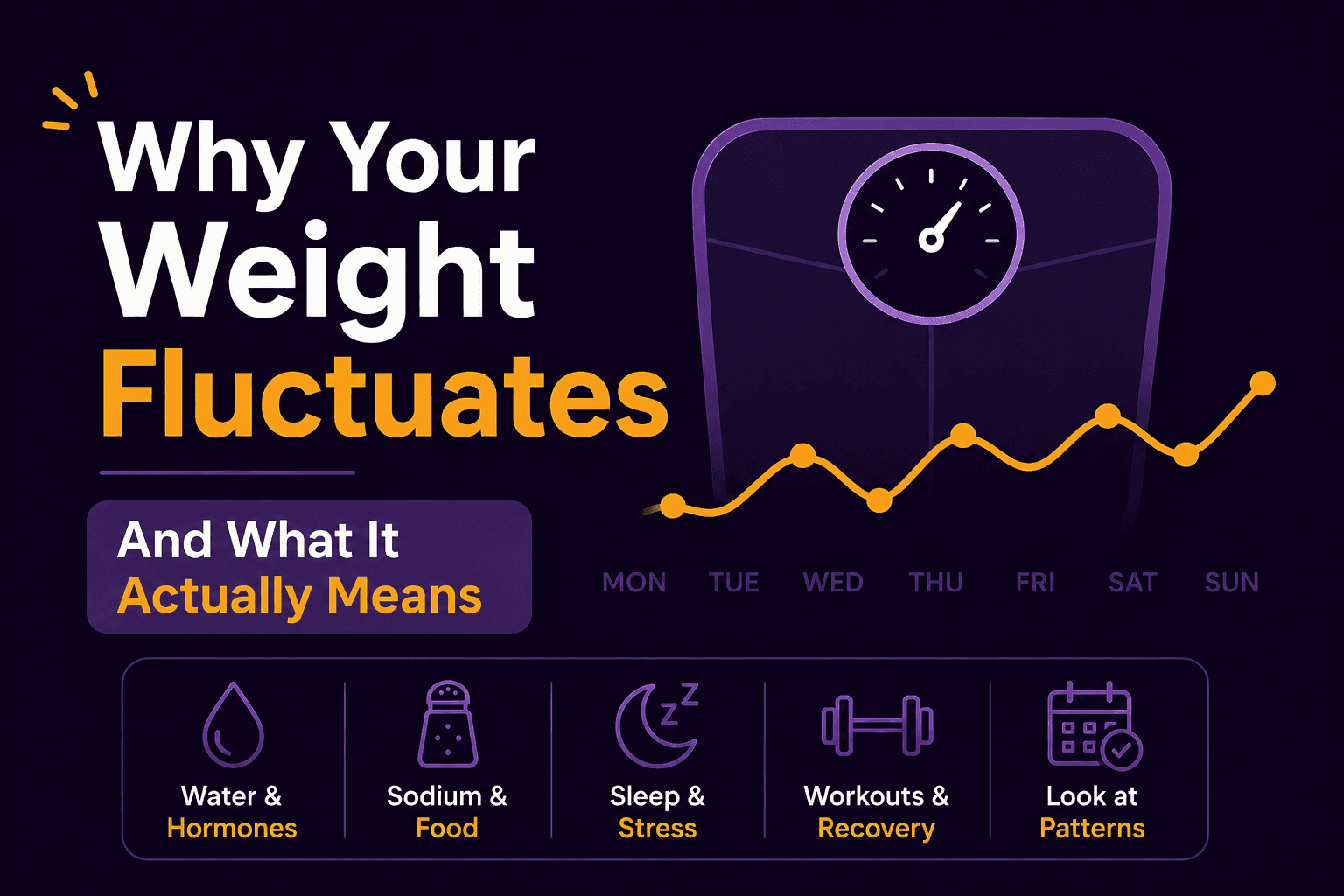
A lot of people step on the scale expecting one clean answer, then panic when the number changes the next morning. The short answer is that weight fluctuations are normal, and they often have more to do with water, hormones, digestion, sodium, sleep, stress, or medication than with sudden fat gain or fat loss. In other words, one weigh-in is a snapshot, not a full story.
Slim AI-Calorie Tracker helps make that story easier to read. Instead of reacting to one number, users can log meals, track calories and macros, and review patterns over time. That matters because the most useful question usually is not “Why did my weight change today?” but “What has been happening across the week?” The app’s meal logs, calorie balance, and progress tracking are built for exactly that kind of pattern awareness.
What Causes Normal Weight Fluctuations?
Day-to-day weight changes are usually driven by normal body processes. A salty meal can make you hold more water. A high-carb day can increase glycogen storage, and glycogen is stored with water. Constipation or slower digestion can make the scale read higher. A hard workout can also temporarily increase water retention because your body is recovering. Alcohol, travel, sleep disruption, and even eating later than usual can all move the number around without meaning you suddenly gained body fat.
That is why daily weight changes often feel dramatic while the real body-composition story is much slower. One day up does not equal fat gain, just like one day down does not automatically mean meaningful fat loss.
Why Weight Fluctuates More in Women
Women often notice weight fluctuations more clearly because hormones can shift fluid balance, appetite, digestion, and bloating across the menstrual cycle. Around a period, many women feel more bloated or heavier even though this is not the same as gaining fat. Period timing can also vary, and some cycle changes are naturally more noticeable than others. NHS guidance notes that bloating around periods is common.
For women in the later end of your audience range, especially the mid-30s into early 40s, cycle patterns can also start changing for some people. That does not mean every weight change is hormonal, but it does mean the scale may not behave the same way every week or every month. This is one reason women’s health and fitness content needs to talk about patterns, not just numbers.
Does PCOS Cause Weight Gain?
Yes, it can. If someone is searching whether PCOS causes weight gain or does PCOS affect weight, the answer is that PCOS is commonly associated with weight gain and can make weight management more difficult for some people. The NHS explains that many women with PCOS have insulin resistance, and that insulin resistance can contribute to weight gain and worsen symptoms. NHS also notes that symptoms often become noticeable in the late teens or early 20s, which fits a big part of your audience's age range.
That does not mean every weight fluctuation is PCOS, and it does not mean weight changes should be self-diagnosed through content. But if someone has irregular periods, acne, excess hair growth, fertility concerns, or unexplained weight changes, it is worth discussing with a doctor.
Can Age Affect Weight Fluctuations?
Yes, and often in very ordinary ways. For people around 18 to 25, college schedules, inconsistent sleep, stress, changing routines, and cycle irregularity can all influence scale weight. For people around 26 to 34, work stress, pregnancy or postpartum changes, PCOS diagnosis, and less predictable routines can all play a role. For people around 35 to 42, stress, recovery, sleep, cycle changes, and early perimenopausal shifts for some women can make weight feel less predictable than it did earlier.
That does not mean age automatically causes unhealthy weight change. It means the context around food, hormones, recovery, and routine often changes with age, and the scale reflects that.
Can Health Conditions Change Your Weight?
They can. PCOS is one example, but it is not the only one. Diabetes can be linked with weight changes too. NIDDK notes that symptoms of diabetes can include increased thirst, increased urination, fatigue, and in some cases unexplained weight loss. That means unexpected weight change, especially when it comes with other symptoms, is something to take seriously rather than just “track harder.”
Blood-pressure treatment and other medications can also affect fluid balance in some cases, which may change the scale even when body fat is not changing much. And if swelling, shortness of breath, or rapid unexplained changes are happening, that moves out of the “normal fluctuation” category and into “please talk to a clinician.”
Can Mental Health Affect Weight?
Yes. Anxiety and depression can affect appetite, routine, activity, sleep, and eating patterns. Some people eat less when they are anxious. Others eat more. Some feel too drained to move or cook. And some psychiatric medications, including some antidepressants, are associated with weight gain for some people. Mayo Clinic notes that weight gain is a possible side effect of nearly all antidepressants, though the effect varies from person to person.
Eating disorders also matter here. Large swings in intake, bingeing, purging, severe restriction, or obsessive scale checking can all create weight changes — but more importantly, they are serious mental-health issues, not just “nutrition problems.” If someone suspects disordered eating or is struggling emotionally around food and weight, the right next step is professional support, not more self-discipline.
When Should Weight Fluctuation Worry You?
Most weight fluctuation is normal. But it is worth speaking to a doctor if the change is rapid, unexplained, persistent, or comes with other symptoms like missed periods, unusual swelling, extreme fatigue, strong thirst, frequent urination, or persistent bloating. PCOS, diabetes, medication effects, and other health conditions can all affect weight, and some of those need proper assessment rather than online guessing.
This is especially important if the scale is moving sharply without obvious changes in food or activity, or if mental health symptoms are also affecting eating and weight.
What Helps You Track Weight More Clearly?
The most useful way to track weight is to make it less emotional and more consistent. Weigh under similar conditions. Look at weekly trends instead of one-day spikes. Keep an eye on meals, cycle phase, sodium-heavy days, alcohol, workouts, and sleep. Use other markers too, like how your clothes fit or how your routine has looked.
This is where a Free AI calorie tracker can help. Slim AI-Calorie Tracker does not diagnose why your weight changed, but it can show whether your intake patterns changed, whether meals were more sodium-heavy or inconsistent, and whether the bigger weekly picture matches the panic of one morning weigh-in. That is a much healthier use of tracking than treating every scale jump like a crisis.
Why does my weight fluctuate?
Your weight can fluctuate for a lot of reasons besides body fat: water retention, hormones, digestion, sodium, stress, medications, health conditions, and mental-health-related changes in routine all play a role. Women often notice this more because of menstrual-cycle shifts, and conditions like PCOS and diabetes can make the picture more complicated. The scale is useful, but only when you read it in context.
Slim AI-Calorie Tracker helps with that context by letting you track calories, meals, macros, and weekly patterns instead of overreacting to one number. And if the fluctuation feels intense, unexplained, or comes with other symptoms, that is the moment to involve a doctor or qualified professional.
FAQ
Why does my weight fluctuate so much day to day?
Usually because of water, sodium, digestion, hormones, sleep, and normal body processes — not instant fat gain.
Does PCOS cause weight gain?
It can. The NHS says PCOS is linked with insulin resistance, which can contribute to weight gain.
Does PCOS affect weight?
Yes, for some people it can make weight management harder because of hormone and insulin-related changes.
Can anxiety or depression affect weight?
Yes. They can change appetite, routine, activity, and sleep, and some medications can also affect weight.
When should I see a doctor about weight changes?
If the change is rapid, unexplained, persistent, or comes with symptoms like swelling, cycle changes, unusual thirst, or ongoing fatigue.